Last updated: April 1, 2026
At first, you might notice the differences between French and English. But these two languages also have a lot in common, which can actually make learning French easier if you already know English.
Key Takeaways
- French and English share many similarities, including the same alphabet, similar sentence structure, and thousands of cognate words.
- There are important differences, such as noun gender, pronunciation, and levels of formality, that learners should be aware of.
- Some words look similar but have different meanings (false friends), so careful attention is needed.
Similarities between French and English
Alphabet
French and English both use the Latin alphabet, which is a big help for learners. Unlike languages like Japanese or Arabic, you don’t have to learn a new way to write. Because of this, many words look similar in both languages, even if they sound different.
Subject-Verb-Object sentence structure
Both French and English usually use the Subject-Verb-Object word order. This makes it easier to build simple sentences when learning the other language. For example, “I eat an apple” in English is “Je mange une pomme in French”, and the word order stays the same.
Shared vocabulary (Cognates)
A big similarity between French and English is their vocabulary. Because of history, about 30% of English words come from French. You can really see this in legal, government, and food-related words.
For example:
- Legal terms: justice, jury, court
- Government terms: president, constitution
- Culinary terms: menu, restaurant, chef
These shared words are called cognates. Many have the same meaning in both languages, so they are usually easy for English speakers to remember.
English loanwords in French
Some English words have become part of the French language, especially in areas like technology, entertainment, and fashion. People use these words in everyday French conversations.
For example:
| Technology & Business | Fashion | Music | Social Media & Streaming | Gaming |
|---|---|---|---|---|
| fashionista | hit | like | gamer | |
| startup | vintage | single | follow | level up |
| cloud | must-have | playlist | stream | noob |
| bug | streetwear | album | share | game over |
Differences between French and English
False friends (faux amis)
While cognates often share the same meaning, some English words look similar to French words but have different meanings.
These are called “false friends“. For example, “library” in English is a place to borrow books, but “librairie” in French means a bookstore. The words are related, but their meanings are different.
Grammar
Many people think French grammar is more complicated than English grammar. One of the hardest parts for English speakers is learning how to change verbs for different subjects and tenses. For example, the verb to be (être) in French has several forms: je suis, tu es, il est, and so on. In English, there are fewer changes.
Gender
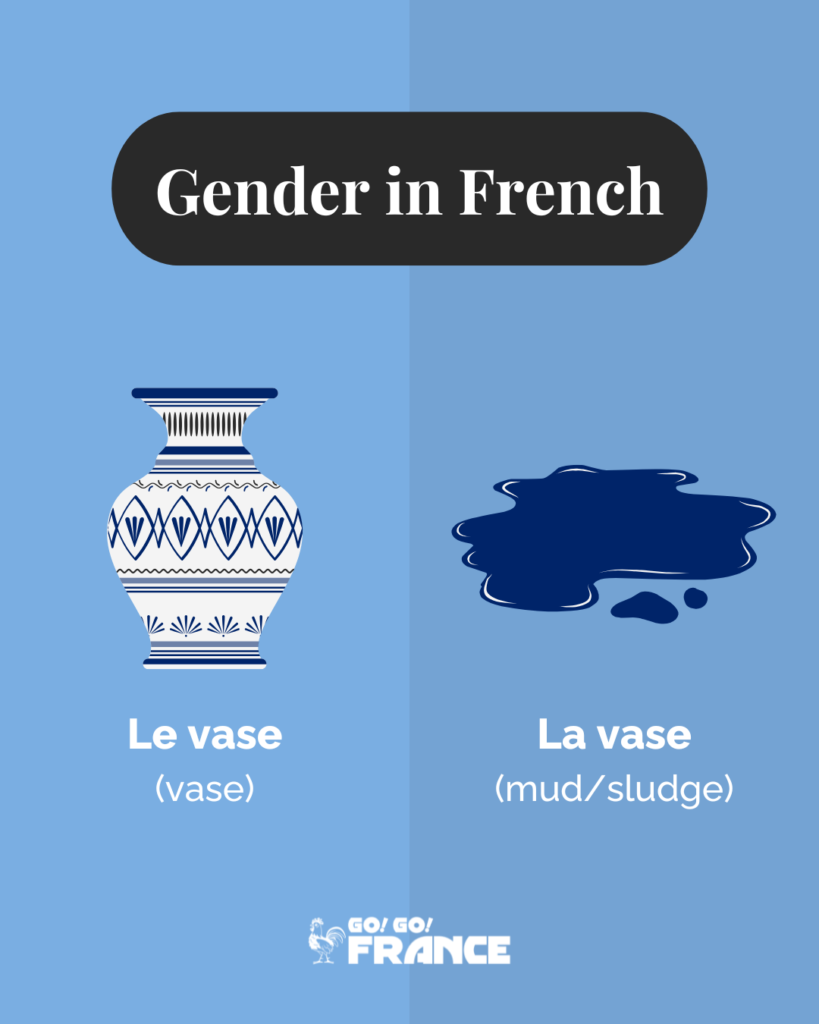
Another big difference between French and English is that French uses gender for nouns.
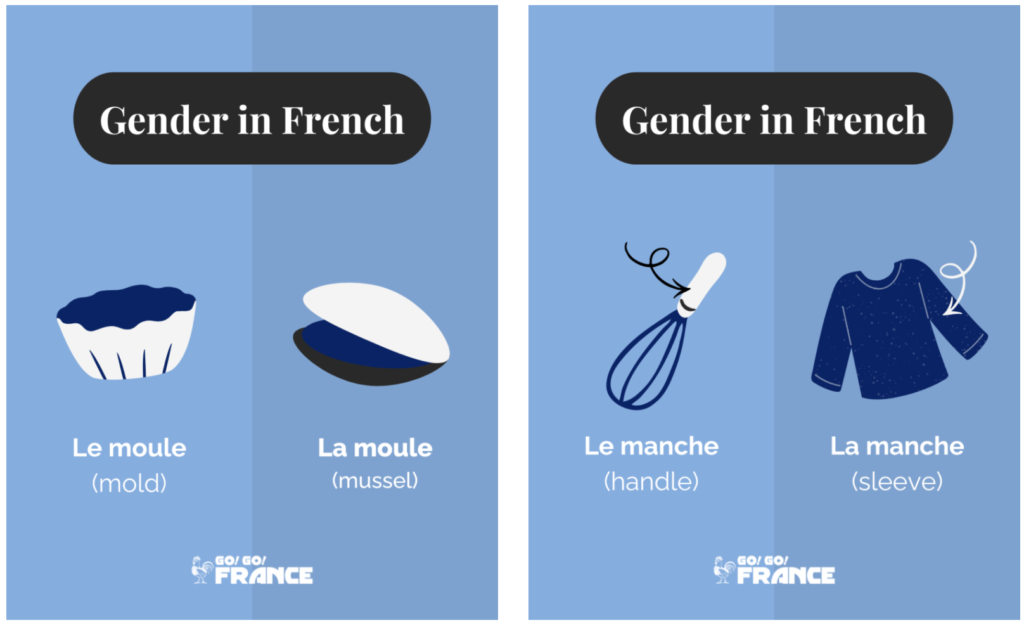
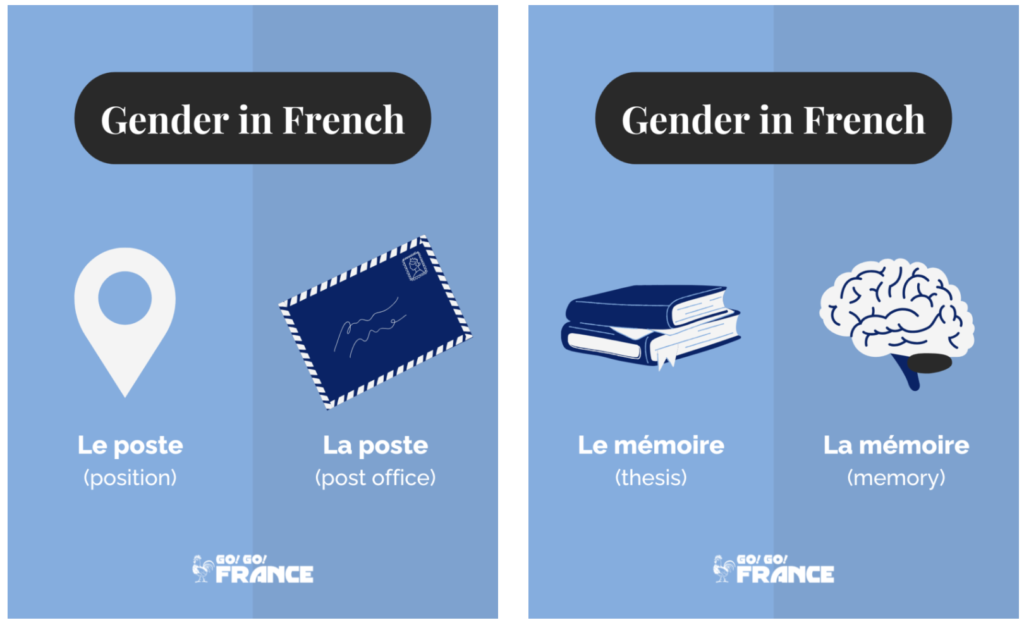
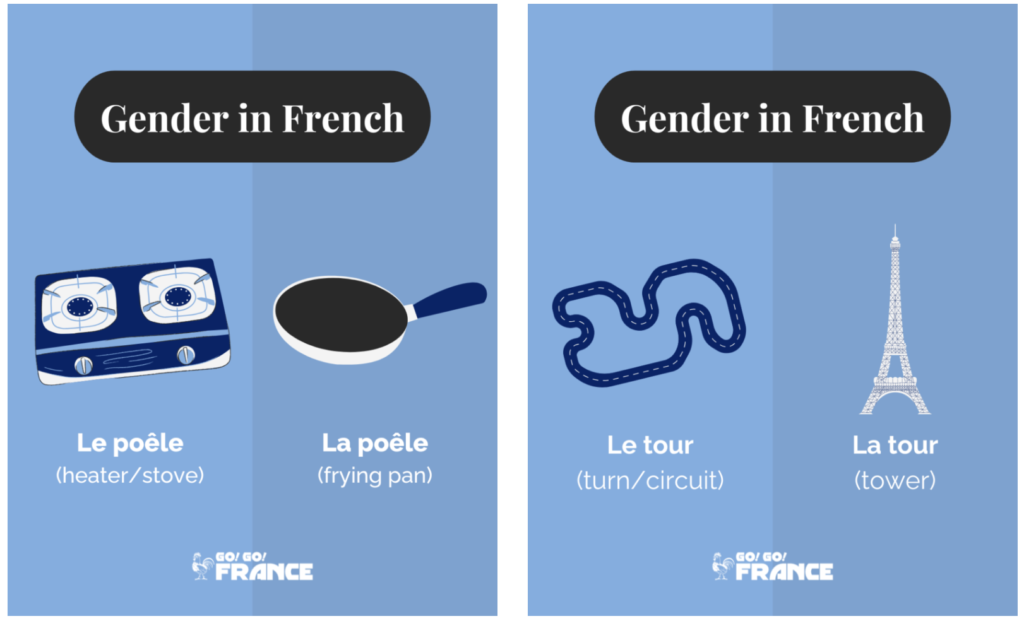
In French, every noun is either masculine or feminine. This affects not only the noun, but also the adjectives and articles that go with it. Sometimes, gender can even change a word’s meaning. For example, “le moule” (masculine) means mold, while “la moule” (feminine) means mussel.
English does not use gender for nouns, which makes this part of grammar simpler.
Pronunciation
Pronunciation is another way French and English are different. French can be hard for English speakers to pronounce, especially because of nasal vowels and silent letters.
For example, in the word “vin” (wine), the nasal -in sound does not exist in English. Also, some letters that are silent in English are pronounced in French, and vice versa.
Some French letter combinations also make sounds you might not expect. Here are a few examples:
- gn: This combination is pronounced as -ny, as in “champagne” (champagne) or “montagne” (mountain).
- eau: This group of three letters is pronounced simply as -o. For example, “eau” (water) sounds like “oh” in English.
- au: This one is also pronounced as -o, as in “automobile” (car) and “chaud” (hot).
- oi: The letters “oi” are pronounced as -wa, as in “trois” (three), “moi” (me), and “bois” (wood).
- ou: The letters “ou” together are pronounced as -oo, as in “sou” (cent) or “fou” (crazy).
Formal vs. Informal
French and English are also different when it comes to formality.
In French, it is important to know when to use “tu” (informal you) and “vous” (formal you). Using the wrong one can seem disrespectful. “Tu” is usually for family, close friends, children, or people your own age in casual situations. “Vous” is for strangers, older people, those in authority, or in business. If you are not sure, use “vous” until someone tells you to use “tu”.
In English, there is not such a strong difference between informal and formal you.
Did you like learning about the French language? Check out other language articles on our blog.